Hop, Skip, Jump
BD House Pro: Tony Robles
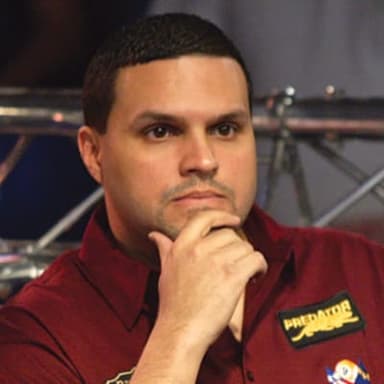
The advancements in jump shots in pool have been truly amazing. It wasn’t really that long ago that jumping balls was more of a stab in the dark than a tactical shot performed with incredible precision as it is by so many players today.
But what doesn’t get discussed much is the technique required to consistently jump balls with accuracy. For starters, like other shots, the jump shot is all about stability. And that stability runs from your feet through your legs, torso, shoulders and up to your head. Without rock solid stability, you will be unlikely to deliver the firm, fluid stroke down onto the cue ball required to force the cue ball into the slate and up over whatever obstacle you intend to clear.
And just how do you go about practicing jump shots? Like any other shot, start with some simple shots and progress as your ability and accuracy increase.
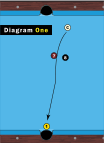
The shot in Diagram One is a nice starter shot. The 1 ball is at the edge of the side pocket, but a direct path is blocked because the 7 and 8 are just close enough together or prevent direct access to the 1. The cue ball is near the rail, which allows you to bridge on the rail. That’s an advantage because bridging up on the rail offers additional leverage. Because the gap is almost wide enough to fit the cue ball through, the cue ball doesn’t need to jump very high to clear the edges of the object balls.
At first, simply work on making the 1. After you become comfortable, start trying to make the shot and control the cue ball. This might require toning back on the power to get the cue ball to stop or adding a little draw to the shot.
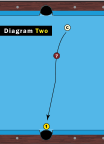
The shot in Diagram Two is somewhat similar, except that the single impeding object ball is in direct line with the 1 ball. Now, you are forced to get the cue ball to clear the entire 2 ¼ inch diameter of the 7 ball. Once you start making the 1 with consistency and are able to control the cue ball, move the cue ball several inches closer to the 7. You’ll quickly discover how much more difficult it is to get that cue ball into the air sooner and higher so as not to clip the 7 ball. And moving the cue ball closer will likely make bridging on the rail impossible.
- Previous
- ← Pool Mourns Dilberto
- Next
- + Strategies + →